


If you have driven I 4 through Orlando during rush hour, you already know it has a reputation, and not a good one. Between the tourist traffic heading toward the theme parks, daily commuters moving between downtown and the suburbs, and constant construction that seems to never fully finish, this corridor sees more than its share of breakdowns. Understanding the most common reasons Orlando drivers end up stranded on the shoulder along I 4 can help you catch a developing problem before it turns into a dangerous situation on one of the busiest roads in Central Florida.
Overheating Is One Of The Most Common Culprits
Florida heat combined with stop and go traffic is a particularly rough combination for engine cooling systems. When traffic slows to a crawl, there is less airflow moving across the radiator, which reduces its ability to dissipate heat effectively. Add in Orlando’s intense summer temperatures and high humidity, and a cooling system that is already a bit weak, whether from low coolant, a failing water pump, or a radiator that needs cleaning, can push an engine into overheating territory faster than a driver expects.
A car that suddenly shows a rising temperature gauge or begins producing steam from under the hood while stuck in I 4 traffic is one of the more common roadside emergencies in this area. Catching a cooling system issue during a routine inspection, well before a hot Orlando afternoon in heavy traffic, is far preferable to discovering the problem while stopped on the shoulder with cars speeding past.
Battery Failures Show Up More Than Drivers Expect
Florida’s heat is actually harder on batteries than cold weather is in many respects, since high temperatures accelerate the internal chemical breakdown that shortens a battery’s usable life. A battery that seems to be working fine can fail with little warning, particularly one that is already a few years old and has spent those years enduring Central Florida’s consistent heat. Stop and go I 4 traffic compounds this issue, since frequent starts and stops combined with air conditioning, phone chargers, and other electronics running continuously put additional demand on a battery that may already be weakening.
Flat Tires And Blowouts Along A Heavily Used Corridor
I 4 sees an enormous volume of daily traffic, and with that volume comes plenty of road debris, uneven pavement sections, and the kind of wear that accumulates on any heavily used highway. Tires that are underinflated or already showing signs of wear are more susceptible to a sudden blowout, especially when combined with the heat that Florida asphalt can reach during summer months, which raises tire temperature and internal pressure beyond what a driver might expect. A tire that looked fine during a casual glance in the driveway can fail without warning once it has spent extended time on hot pavement at highway speed.
Construction zones add another layer of risk along this corridor, since ongoing lane shifts and uneven surfaces can be harder on tires and suspension components than a typical stretch of highway. Debris left behind from construction work, combined with the sheer number of vehicles moving through a narrowed section of road, increases the odds of picking up a nail or hitting a sharp piece of material that a driver would have an easier time avoiding on a less congested route.
Starting Problems That Leave Drivers Stuck At The Worst Times
A car that will not start is one of the most common reasons for a call to a mobile mechanic in this area, and it does not always happen conveniently in a driveway. Corroded battery terminals, a failing starter, or an alternator that is no longer charging properly can all leave a driver stranded, sometimes in a parking lot near the parks and sometimes right on the shoulder of I 4 itself. If you have experienced this kind of frustration recently, our guide on the top 10 reasons your car won’t start and how to get back on the road walks through many of the underlying causes and what typically needs attention to resolve them.
Transmission And Engine Warning Signs Drivers Often Ignore
Sometimes a breakdown does not happen suddenly at all, but rather builds up over weeks of ignored warning signs. A check engine light that has been on for a while, a transmission that hesitates or shifts roughly, or a noticeable loss of power during acceleration are all signals that something needs attention before it fails completely. Heavy I 4 traffic, with its constant stopping and restarting, tends to expose these developing issues faster than a more relaxed commute would, since a marginal component gets far more repeated stress in this kind of driving environment.
Why Catching Problems Early Matters So Much On This Corridor
Breaking down on I 4 is not just inconvenient, it can also be genuinely dangerous given the volume and speed of traffic that moves through this corridor throughout the day. A vehicle stopped on the shoulder, even with hazard lights on, creates a risk that is far higher than dealing with the same mechanical issue safely at home or in a parking lot before setting out. This is exactly why catching a developing problem, whether it is a weakening battery, a tire showing early wear, or a cooling system running a bit hotter than it should, matters more for regular I 4 commuters than it might for someone driving mostly on quieter roads.
Why A Mobile Mechanic Is A Smart Option For Orlando Commuters
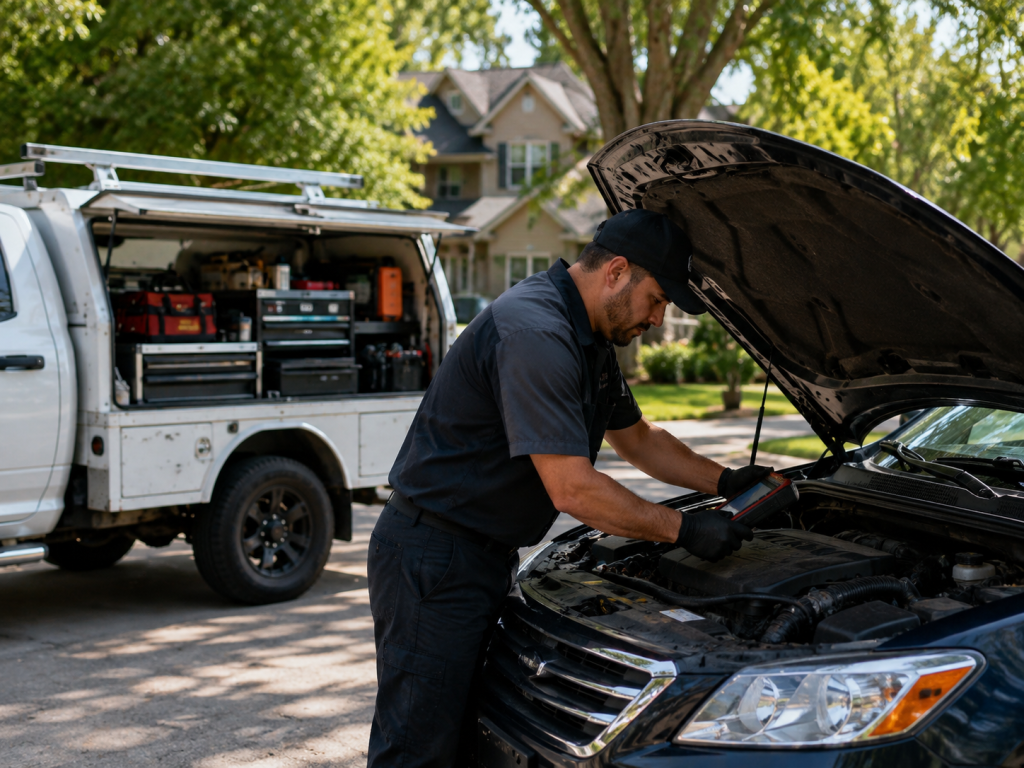
Rather than waiting until a small issue turns into a roadside emergency, having a technician inspect your vehicle at your home or office allows problems to be caught and addressed in a safe, controlled environment rather than on the shoulder of a busy highway. A mobile mechanic can check your battery, cooling system, tires, and other common failure points before they turn into the kind of breakdown that leaves you stranded during your commute.
We covered the broader advantages of this approach in our article on why mobile mechanics are better than traditional auto shops in Orlando, which explains how convenience and proactive service come together, particularly valuable for anyone who regularly relies on I 4 to get where they are going.
Stay Ahead Of The Next Breakdown
I 4 is not getting any less busy, and the wear it puts on batteries, cooling systems, tires, and other components is not going away either. Building a habit of regular inspections and paying attention to early warning signs is one of the most effective ways to avoid becoming one of the many drivers who end up stranded along this corridor every week. Even a simple visual check before a long drive, glancing at tire tread, checking that the temperature gauge behaves normally during the first few minutes of driving, and listening for any new sounds, can catch a problem before it turns into a shoulder side emergency.
If it has been a while since your vehicle had a thorough checkup, or if you have noticed any of the warning signs covered here, visit our homepage to learn more about our services, or reach out through our contact us page to schedule a visit at your home or office before your next drive down I 4.
A little preventive attention now is far better than dealing with a breakdown on one of Orlando’s busiest and most unforgiving roads.