


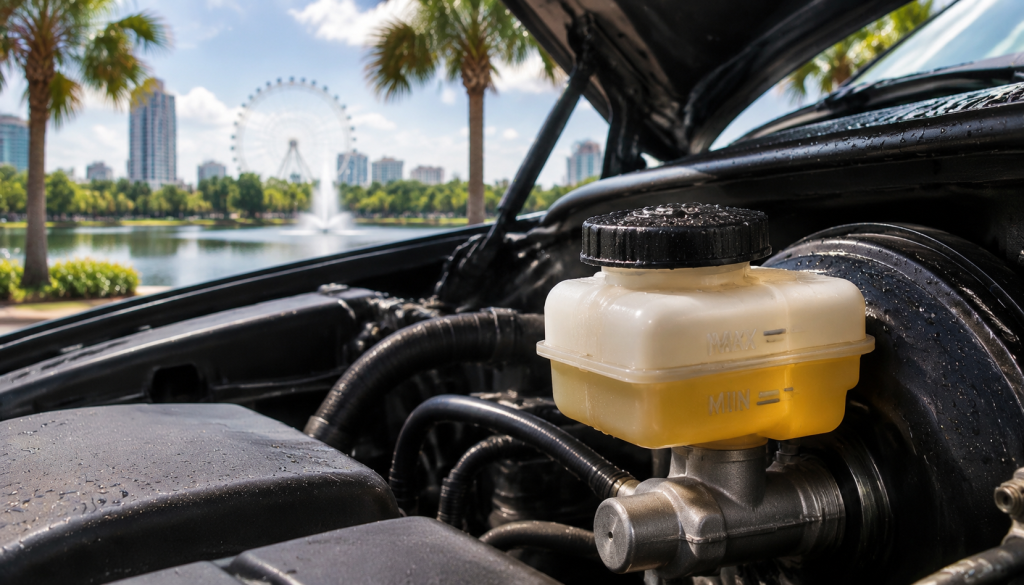
Most drivers think about brake pads and rotors when they think about brake service, but there is another part of the system that quietly works just as hard: the brake fluid. It sits sealed in the lines and reservoir, carrying the force of your foot from the pedal to the wheels. Because it is out of sight, it is easy to forget. In a place like Orlando, where the air is thick with moisture for much of the year, that neglect can come at a price. Brake fluid absorbs water from the air over time, and the more humid the climate, the more important it is to keep an eye on it. This guide explains how humid air affects brake fluid, what that means for your brakes, the signs that the fluid needs attention and when to replace it. If you are searching for a brake fluid flush in Orlando, here is what you should know.
What Does Brake Fluid Do?
Your brakes are a hydraulic system. When you press the pedal, you push fluid through the brake lines to the calipers or wheel cylinders at each wheel, and that pressure clamps the pads or shoes against the rotors or drums. Brake fluid has a few essential jobs:
- Transmitting force. Liquids do not compress, which lets pedal pressure travel efficiently to the wheels.
- Resisting heat. Braking creates a lot of heat, and the fluid has to stay liquid without boiling.
- Protecting parts. Brake fluid contains additives that help guard internal parts against corrosion and wear.
- Lubricating moving parts. It helps pistons and seals move smoothly.
When the fluid is in good condition, the brakes respond firmly and predictably. When it is contaminated or worn out, braking can suffer.
Why Brake Fluid Absorbs Moisture
The most common types of brake fluid are glycol based. These fluids are hygroscopic, which means they naturally attract and absorb water. The brake system is not fully airtight. Moisture can enter in tiny amounts through the microscopic pores in rubber hoses, through seals and each time the reservoir is opened. Over months and years, the fluid slowly takes on water. This is normal and expected, which is why brake fluid is a maintenance item with a replacement schedule rather than a lifetime fill.
Some vehicles use a different type of fluid, such as silicone based fluid, which behaves differently, so it is important to use only what your owner’s manual specifies. Never mix fluid types unless the manufacturer says it is safe.
How Florida Humidity Makes It Worse
Brake fluid does not need rain to collect water. It draws moisture from the surrounding air, and the more water vapor in the air, the more there is to absorb. Orlando’s warm, humid weather, along with frequent storms, gives the fluid plenty of opportunity. A car that sits outside in damp conditions, or sees heavy use in hot, wet weather, can accumulate moisture faster than you might expect. Humidity also encourages corrosion on metal parts throughout the car, which is part of why brake service matters in this climate. For a broader look at why Florida conditions are hard on vehicles, our post on common reasons Orlando drivers get stranded is a helpful read.
What Water in Brake Fluid Does
A small amount of moisture may not cause a noticeable problem right away. But as the water content rises, several things can happen.
It lowers the boiling point
Brake fluid is designed to resist boiling at high temperatures. Water has a much lower boiling point than brake fluid, so as moisture builds up, the fluid’s boiling point drops. During heavy or repeated braking, such as a long downhill, towing or stop and go traffic in summer heat, the fluid can get hot enough to boil. Boiling fluid creates vapor bubbles in the lines, and unlike liquid, vapor can be compressed. The result can be a soft, spongy pedal and a serious loss of braking effectiveness. This is sometimes called brake fade or vapor lock, and it is one of the main safety reasons to keep fluid fresh.
It promotes corrosion
Water inside the system encourages rust and corrosion in brake lines, calipers, wheel cylinders and, in cars with anti lock brakes, the hydraulic control unit. Corrosion can cause parts to stick, leak or fail, which can lead to larger repairs. Fluid additives slow this process, but they wear out as the fluid ages.
It affects the anti lock system
Modern anti lock braking systems have small valves and passages that depend on clean fluid. Contamination and corrosion can damage these components over time.
It degrades seals and other parts
Old, contaminated fluid can contribute to wear on seals and other soft parts, leading to leaks and poor performance.
Signs Your Brake Fluid Needs Attention
Because the fluid deteriorates slowly, you may not notice a problem until it is advanced. Watch for these signs:
- A soft or spongy brake pedal. The pedal feels lower or less firm than usual, or sinks slowly.
- Reduced braking performance, such as longer stopping distances.
- A brake or anti lock warning light on the dashboard. Your owner’s manual explains what each light means for your vehicle.
- Dark, murky fluid. New fluid is usually clear to light amber. Fluid that has turned dark brown or black, or looks cloudy, is a sign of age and contamination. If you check the reservoir, follow your manual’s instructions, and do not leave the cap off.
- A low fluid level. A level that drops over time can mean worn pads or a leak. A leak is serious and should be checked immediately.
- Brake fade after repeated use. Braking feels weaker after long descents or heavy stops.
- A burning smell or very hot wheels after hard braking.
- Corrosion or fluid seepage near the calipers or lines.
If the pedal feels soft or sinks, or you suspect a leak, do not wait. Have the car inspected right away, and avoid driving it if the brakes do not feel reliable.
When to Replace Brake Fluid
There is no single schedule that fits every vehicle. Many manufacturers recommend replacing brake fluid at regular time or mileage intervals, and time matters because fluid absorbs moisture whether or not the car is driven. The best source is your owner’s manual, which lists the recommended interval and the correct fluid type for your car. Because Florida’s humidity can speed up moisture absorption, many drivers choose to have the fluid tested or inspected regularly and to follow the shorter end of the recommended range. A technician can check the condition of the fluid with a test and advise you.
You should also consider replacement:
- After a major brake repair that opens the hydraulic system.
- If the pedal feels soft and air or moisture is suspected.
- If the fluid is dark, cloudy or contaminated.
- If the car has been sitting for a long time.
- If you tow, haul heavy loads or do a lot of hard braking.
What a Brake Fluid Flush Involves
A brake fluid flush replaces the old fluid throughout the system with fresh fluid. A thorough service usually includes:
- Testing the fluid. A technician may check moisture content or condition to see whether replacement is needed.
- Using the correct fluid. The type and specification listed in your owner’s manual matter.
- Pushing out the old fluid. Fluid is pushed through each brake line, following the manufacturer’s procedure.
- Removing air. The system is bled to remove any air bubbles.
- Checking the system. The technician looks for leaks, checks the pedal feel and inspects the other brake components.
- Special procedures for some vehicles. Cars with advanced anti lock or stability systems may need specific tools or steps.
- Safe disposal. Old brake fluid is a hazardous material and must be disposed of properly.
Why You Should Not Do It Yourself Without Experience
Brake work is a safety job, and a mistake can have serious consequences. Air left in the lines, the wrong fluid or an incomplete bleed can all lead to poor braking. Brake fluid is also harmful to paint and can irritate skin and eyes. If you are not experienced, it is best to leave it to a professional. If you do decide to check your fluid level, follow your owner’s manual, keep the reservoir closed as much as possible and never use fluid from an old, previously opened container.
Other Brake Care Tips for Humid Climates
- Have the brakes inspected regularly. Pads, rotors, calipers, lines and hoses all wear and can corrode.
- Watch for rust. A car that sits can get surface rust on the rotors, which usually clears after a few stops. Persistent noise or vibration is worth checking.
- Drive the car. Long periods of sitting are hard on brakes and fluid.
- Brake gently and plan ahead. Less heat means less strain on the fluid.
- Follow your owner’s manual schedule for brake service and fluid replacement.
- Do not ignore a warning light or a soft pedal.
When Brake Trouble Is Not the Only Problem
Humidity affects more than brakes. It can contribute to electrical trouble, battery corrosion and hard starting. If your car will not start on a damp morning, our guide on the top 10 reasons your car won’t start can help you figure out where to begin.
How a Mobile Mechanic Can Help
Brake service should not be something you put off because getting to a shop is a hassle. A mobile mechanic can come to your home or workplace, inspect the brakes, check the condition of the fluid and perform a brake fluid flush on site in many cases. If the inspection turns up a bigger problem, the technician can explain it and recommend next steps. Some vehicles need specialized equipment for certain brake systems, and a good technician will tell you honestly if a job needs a shop.
Quick Summary
- Brake fluid absorbs moisture from the air, and Florida humidity speeds it up.
- Water lowers the fluid’s boiling point and encourages corrosion.
- Signs include a soft pedal, dark fluid, warning lights and brake fade.
- Follow your owner’s manual for the fluid type and replacement interval.
- Have the fluid tested or flushed by a professional.
- Never ignore a soft pedal or a leak.
Fresh brake fluid is one of the simplest ways to protect one of your car’s most important safety systems. If you would like a technician to check yours, visit our homepage to learn more, or contact us to schedule a visit.